Activity Book: A Warm Script Font for Creative Branding
I was recently tasked with revamping the visual identity of a local bakery that had been around for over a decade. The owner wanted something fresh but still rooted in tradition—something that felt personal and inviting. I opened up a blank brand board, ready to explore typefaces that could capture that warm, handcrafted vibe. That’s when I came across Activity Book.
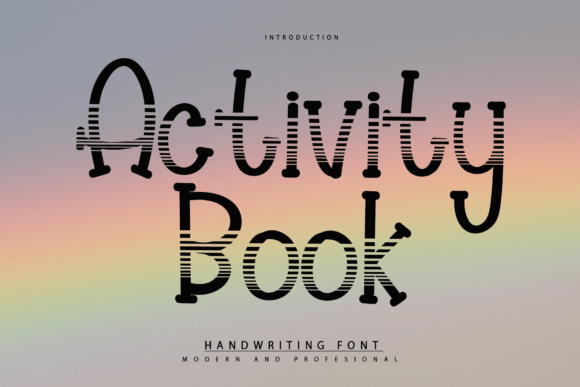
At first glance, Activity Book feels like it was written by someone who loves to doodle. It’s a sweet and friendly handwritten font that carries a natural, organic feel. The letterforms are slightly irregular, which gives them a human touch. There’s a gentle curve to the strokes, almost like the handwriting of a friend who writes quickly and casually. It doesn’t feel too stylized or too formal—it sits somewhere between a script and a casual handwriting style, making it incredibly versatile.
A Font That Feels Like a Handwritten Note
When I first tested Activity Book on a logo concept for the bakery, I was immediately drawn to its personality. It’s not just a font; it’s a character. The way the letters flow together, especially in phrases like “Baked with Love” or “Fresh Daily,” creates a sense of warmth and approachability. It’s perfect for a brand that wants to feel personal and community-focused.
I paired it with a simple sans serif font for the body text, which helped balance the playful energy of Activity Book. The contrast worked well, allowing the headline to stand out while keeping the rest of the design clean and readable. On a business card mockup, the font added a nice touch without overwhelming the layout.
Testing Activity Book in Real Design Projects
Over the course of a few weeks, I used Activity Book in several different design scenarios. On a packaging mockup for a new line of pastries, it looked great on the front label. The soft curves matched the delicate nature of the treats, and the overall aesthetic felt cohesive. I also tested it on social media graphics, where it performed well in Instagram posts and Facebook banners. It wasn’t too busy, and it maintained legibility even at smaller sizes.
One thing I noticed was how well it worked as a display font. Whether it was on a website header, a poster, or a flyer, Activity Book held its own. However, I did find that it can be tricky to use in long body text. The irregularity of the letterforms makes it less suitable for paragraphs or extended content. It’s best reserved for headlines, short phrases, or accents rather than large blocks of text.
Font Pairing and Practical Considerations
If you’re considering using Activity Book in your own projects, it’s worth thinking about how it pairs with other fonts. I found that pairing it with a modern sans serif like Montserrat or Lato created a nice contrast. For a more traditional look, a serif font like Playfair Display or Cinzel would complement it nicely. If you’re going for a more eclectic feel, you might consider pairing it with another script or handwritten font.
It’s also important to note that Activity Book comes with several styles, including alternates, ligatures, and swashes. These add versatility and allow for more creative expression. The font supports multiple languages, which is a plus if you’re working on international projects. And since it’s available as a webfont, it’s easy to integrate into websites and digital assets.
Before using Activity Book in client work, I always check the commercial font licensing. It’s crucial to ensure that the font is appropriate for the intended use, whether it’s for branding, packaging, or digital products. Some fonts have restrictions on print-on-demand or merchandise use, so it’s always better to double-check the terms.
When to Use Activity Book and When Not To
Activity Book is ideal for brands that want to convey a friendly, approachable, and handmade feel. It works well for creative studios, boutique businesses, and small shops that value authenticity and personalization. It’s particularly effective in logo design, social media graphics, and packaging concepts.
However, there are situations where it might not be the best choice. If you need a font that’s highly readable in small sizes or for long body text, Activity Book might not be the right fit. It’s also not the most professional option for corporate or formal branding. That said, it’s a fantastic tool for creative, artisanal, or lifestyle-based brands.
Overall, Activity Book is a great addition to any designer’s toolkit. It brings a unique personality to branding projects and adds a touch of warmth and charm. With the right pairings and applications, it can elevate your designs and make them feel more personal and engaging.